Japan Gave Me Permission to Lie on the Floor and Call It Work
Somewhere in my mid-twenties I became completely convinced that rest was a reward you earned after doing enough. Like a loyalty points system. Put in the hours, grind through the week, and maybe — maybe — you got to watch Netflix on Sunday without that low-grade hum of guilt following you around the apartment.
Then I started paying attention to Japan. And slowly, that whole belief system got very, very uncomfortable.
The Ganbari Trap Nobody Warns You About
If you've spent any time around Japanese culture — through anime, language study, travel, or just falling down the right YouTube rabbit holes — you've probably bumped into the concept of ganbari. It's usually translated as perseverance, effort, or doing your best. Characters in shonen anime embody it constantly. It's in every sports drama, every underdog arc, every tearful training montage.
And it's real. Japan genuinely does have a cultural respect for sustained, sincere effort. You see it in craftspeople who spend decades mastering a single skill. You see it in students who study through summer break without complaining. You see it in salarymen who stay at the office long after the work is technically done, just to signal commitment.
But here's what Western audiences almost always miss: ganbari doesn't exist in isolation. It has a counterpart. And that counterpart is treated with the same cultural seriousness.
Meet the Other Half
Japanese culture has always understood that you cannot pour from an empty vessel — they just phrase it differently and build it into daily life rather than printing it on motivational mugs.
The concept isn't one single dramatic word like ganbari. It's more of a quiet, distributed understanding woven through several practices and ideas. Kyuusoku (rest, recuperation). Neru as a verb that carries real dignity — sleeping isn't slacking, it's maintenance. The entire architecture of ofuro culture, where a long bath at the end of the day is non-negotiable self-care, not indulgence. Even the deliberate pauses in noh theater and tea ceremony — stillness isn't empty space, it's load-bearing.
What ties all of this together is a fundamental framing difference: in Japan, rest isn't the absence of productivity. It's a form of it.
Why Americans Are So Bad at This
Let's be honest with ourselves for a second. American culture has a complicated, often toxic relationship with downtime. We brag about being busy. We describe sleep as something we'll "catch up on" like it's an email inbox. We've turned the word "hustle" into a personality trait and made "lazy" one of the worst things you can call a person.
The result? A country full of people who are technically resting — scrolling, zoning out, binge-watching — but who can't actually recover because they feel too guilty to let themselves fully stop. That guilt creates a low-level stress response that runs in the background constantly. You're not working, but you're not resting either. You're just... suspended in a vague state of not-quite-either.
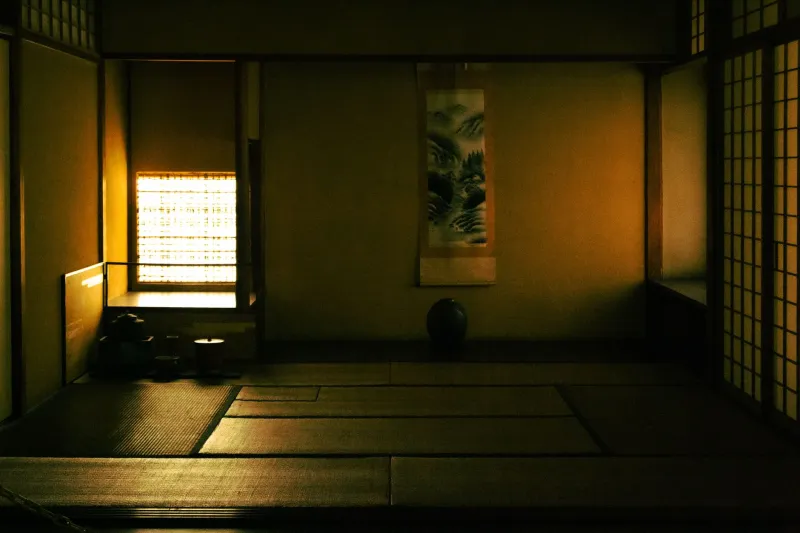
Japanese culture, at its best, doesn't do that. When it's time to rest, you rest with intention. You take the bath seriously. You sleep the full sleep. You sit in the garden and actually look at the garden instead of thinking about your inbox.
What Strategic Rest Actually Looks Like
One of the most striking things for many first-time visitors to Japan is the complete social acceptability of sleeping in public. On trains, in parks, even briefly at your desk — inemuri, the practice of dozing while seemingly still present, is tolerated and sometimes even read as a sign that you worked hard enough to need it.
That's a wildly different signal than what American office culture sends. Here, falling asleep at your desk is a fireable offense or at least deeply embarrassing. In Japan, it can quietly communicate dedication.
Beyond inemuri, there's the rhythm of Japanese leisure time that feels genuinely restorative rather than just time-filling. The onsen trip isn't a luxury vacation — it's maintenance. The Sunday afternoon walk through a quiet neighborhood isn't wasted time — it's how you refill whatever the week drained. Even the deliberate, unhurried ritual of making tea at home carries a quality of intentional deceleration that most Americans never access.
The key word is intentional. This isn't about doing nothing because you have nothing to do. It's about doing nothing on purpose, with the full understanding that this is how you become capable of doing something well again.
The Anime Angle Nobody Talks About
Here's something interesting for anyone who's spent serious time with slice-of-life anime: the genre is essentially a masterclass in the aesthetics of rest.
Yotsuba&!, Aria, Natsume's Book of Friends, Non Non Biyori — these aren't stories about achievement. They're stories about the texture of quiet days. The way light hits a room in the afternoon. The feeling of a slow walk home. The small, complete pleasure of a cold drink on a hot day.
Western audiences sometimes find these shows frustrating at first because nothing happens. And then something shifts and you realize that's the entire point. The shows are teaching you how to inhabit a moment instead of rushing through it. They're modeling a relationship with time that American culture doesn't really offer.
That's not an accident. It reflects something genuine about how Japanese culture values the quality of everyday experience — including the experience of stopping.
So What Do You Do With This?
You don't have to move to Japan or overhaul your entire life. But there are some practical shifts worth considering.
First, try separating rest from reward. You don't have to earn the right to stop. Rest is maintenance, not a prize. Your brain and body need it the way a car needs fuel — not because you did enough miles, but because that's just how it works.
Second, give your rest a container. One thing Japanese rest culture does well is making downtime specific. The bath at 9pm. The walk on Sunday morning. The cup of tea before bed. When rest has a form, it's easier to actually do it — and easier to actually feel it.
Third, notice the guilt and don't automatically obey it. That background hum of "I should be doing something" is a cultural script, not a moral truth. Japan has a different script. You're allowed to borrow it.
Lying on the floor on a Tuesday afternoon, staring at the ceiling, letting your brain go genuinely quiet — that might be exactly what makes Wednesday worth anything.
Japan figured that out a long time ago. We're just a little late to the lesson.