Bonyari: The Japanese Permission Slip to Stop Optimizing Every Waking Second
Let me paint you a scene you've probably seen a hundred times in anime without ever really thinking about it.
The main character is stuck. The problem is impossible. The deadline is tomorrow. And instead of grinding harder, pulling an all-nighter, or downloading a productivity app — they go sit by a window. They watch rain hit the glass. Their eyes go soft and a little unfocused. A cat walks by. They blink slowly. And then, somewhere between the second and third raindrop, the answer just... arrives.
We write this off as a storytelling shortcut. A visual metaphor for inspiration. But what if it's actually something more literal? What if Japan has been encoding a very real cultural practice into its fiction all along?
The word is ぼんやり — bonyari. And it doesn't have a clean English translation, which is probably why we've been sleeping on it for so long.
What Bonyari Actually Means (And What It Doesn't)
Bonyari isn't sleep. It isn't meditation, at least not in the structured, app-guided, ten-minutes-a-day format that American wellness culture loves to sell. It's not even relaxation in the way we typically frame it — a reward you've earned after finishing your tasks.
The closest translation is something like "vague" or "hazy," but used to describe a mental state rather than an image quality. It's the feeling of your mind going pleasantly loose. Thoughts drift in and out without being grabbed and interrogated. You're not focusing on anything in particular, but you're not asleep either. You're just... existing in a kind of soft, ambient awareness.
In Japan, this state is considered normal. Natural, even. Something that happens to people and isn't immediately pathologized as laziness or wasted time.
In the US? We've basically declared war on it.
The Hustle Culture Problem Nobody Wants to Admit
If you've spent any time on American social media in the last decade, you know the vibe. Wake up at 5am. Cold plunge. Journaling. Protein shake. Deep work block. Side hustle check-in. Optimize. Stack. Grind.
Rest, when it's allowed at all, has been rebranded as "recovery" — a tool for performing better later, not something valuable in itself. Even our vacations have become content. Our hobbies need to scale. Our downtime needs to be documented and justified.
And the result? A collective burnout so widespread that "I'm exhausted" has basically become a personality trait.
Here's what's genuinely wild though: all that optimization isn't even making us more creative. Research on the brain's default mode network — the neural system that activates specifically when you stop focusing on tasks — suggests that unfocused idle time is when your brain does some of its most important work. Making unexpected connections. Processing emotional experiences. Generating original ideas.
In other words, your brain needs bonyari time. It's been asking for it. We just stopped listening.
How Japan Built Space for Doing Nothing
This isn't an accident of Japanese culture. It shows up in a lot of places once you start looking.
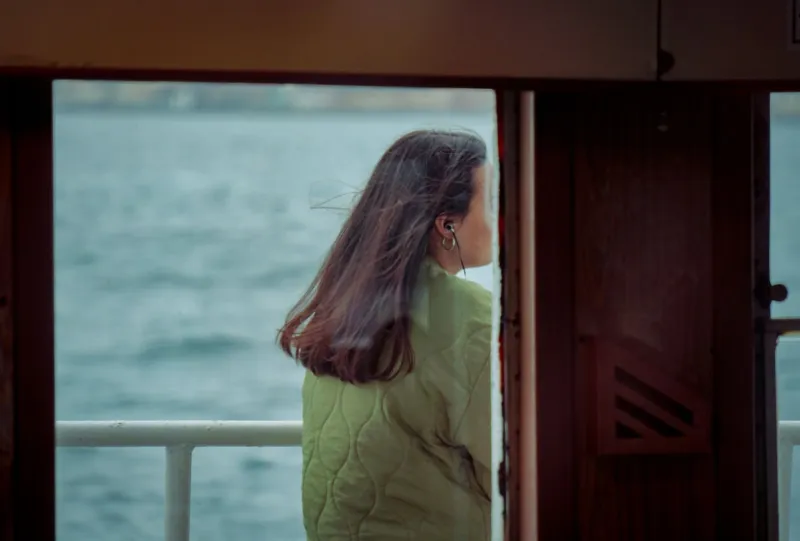
Take the long train commutes that are a daily reality for millions of people in Tokyo and Osaka. Rather than treating this time as dead space to be filled with podcasts and emails, a lot of commuters just... ride. They look out the window. They let their minds wander. The quiet, rhythmic movement of the train becomes a kind of container for bonyari.
Or consider the cultural role of ma (間) — the concept of meaningful empty space that shows up in everything from architecture to conversation to music. Japan has a long tradition of treating gaps and pauses as active, valuable things rather than voids to be filled. Bonyari fits neatly into that same philosophy. The empty moment isn't wasted. It's doing something you can't see.
Even in manga and anime, the visual language of bonyari is everywhere. The character staring at the sky. The quiet scene of someone watching steam rise from a cup of tea. These panels or shots aren't filler — they're telling you something about how that character processes the world.
What Happens When You Actually Try It
Here's the uncomfortable part for anyone raised on American productivity culture: bonyari feels wrong at first. Almost physically uncomfortable.
You sit down with nothing to do and your brain immediately starts generating a to-do list. You reach for your phone. You feel vaguely guilty. Your internal monologue starts asking what you're even doing with your life.
That reaction is real, and it's worth sitting with rather than immediately escaping.
Because if you can push through the first five or ten minutes of that discomfort — if you can resist the pull to optimize the moment — something shifts. The mental chatter gets quieter. The background noise of low-level anxiety fades a little. And your mind starts doing what it was always trying to do: wander, connect, rest, and occasionally surface something genuinely useful from the depths.
You don't need a special setup for this. No app. No timer. No journaling prompt afterward to "capture your insights." You can do it on your lunch break, staring at the parking lot. You can do it on your couch on a Sunday afternoon. You can do it on the bus, with your headphones out for once.
The only rule is that you're not trying to get anything out of it.
The Anime Character Who Already Knows This
Go back and rewatch your favorite slice-of-life anime with this lens and it becomes almost funny how obvious it is.
Mushishi's Ginko wanders through fog and empty landscapes and solves ancient supernatural problems through a kind of patient, receptive attention. Non Non Biyori is basically a love letter to doing nothing in the countryside. Even in shonen series, the breakthroughs almost never come during the training montage — they come during the quiet moment after, when the character sits alone and lets things settle.
Japanese storytelling has always understood that the empty moment is where things happen. We just kept skipping those scenes to get to the action.
Giving Yourself Permission
The hardest part of adopting bonyari isn't the practice itself. It's the permission.
American culture has spent years telling us that our value is tied to our output. That rest is something you earn. That an unscheduled hour is an opportunity you're wasting.
Japan offers a different frame: that the unfocused moment is part of the work. That your brain is not a machine to be run at maximum capacity until it breaks. That sometimes the most productive thing you can do is sit by a window and let your eyes go soft.
You don't have to move to Tokyo to try this. You don't have to become a different person.
You just have to let yourself be a little bonyari — and see what shows up when you stop trying so hard to control everything that does.