The Space Between: How Japan's Concept of 'Ma' Quietly Changes Everything You Thought You Knew About Emptiness
The Word That Stops You Mid-Sentence
Somewhere between my third attempt at learning conversational Japanese and my first real look at a traditional Japanese room, I ran into a concept that didn't have a clean English translation. The word was ma (間), and every definition I found felt slightly off. Negative space. A pause. An interval. Emptiness with intention.
None of those quite nailed it, which, honestly, might be the whole point.
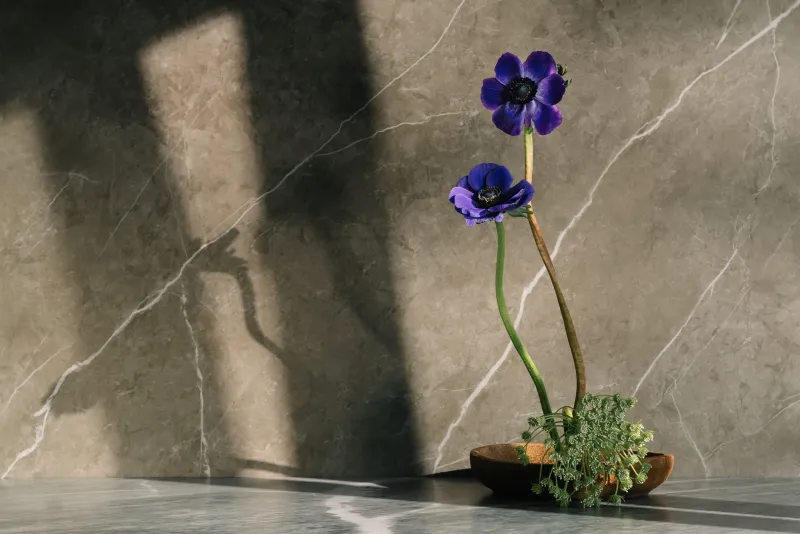
Ma isn't just about what's absent. It's about what that absence does. It's the breath before the punch line. The white wall behind a single hanging scroll. The moment of quiet after your host sets down your tea and neither of you feels the need to fill it with words. In Japanese aesthetics, that space isn't nothing — it's load-bearing.
And once I started noticing it, I couldn't stop seeing how aggressively American culture tries to eliminate it.
Every Gap Gets Filled, Always
Think about the last time you sat in silence with someone in the US without at least one of you reaching for a phone. Or the last restaurant you ate at that didn't have music, TVs, or ambient noise pumped in at a volume specifically designed to prevent you from sitting too comfortably in your own thoughts. We have podcast playlists for commutes, background noise apps for working, and the unspoken social rule that silence in conversation means something went wrong.
The American default is: if there's a gap, fill it. If there's a wall, hang something on it. If there's a pause, apologize for it.
Japan operates on a fundamentally different assumption — that the gap might be exactly what's needed, and interrupting it would be the actual mistake.
Ma in Architecture: Rooms That Breathe
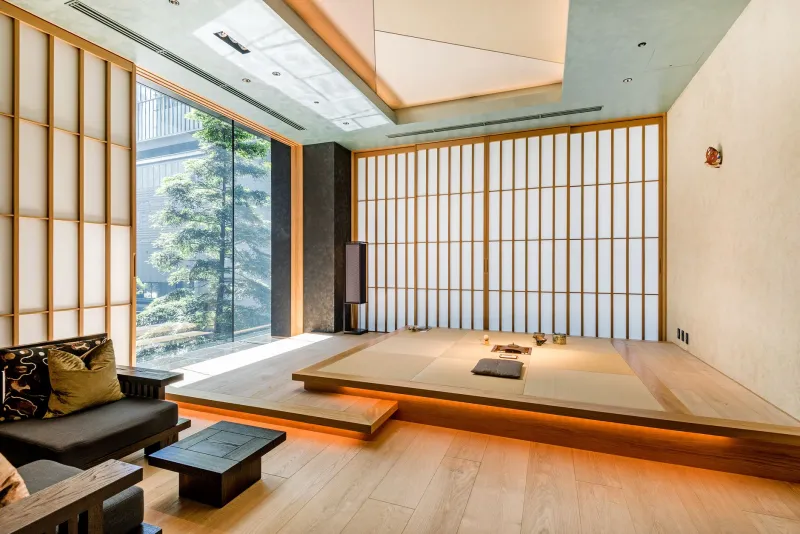
The most immediately visible version of ma is in traditional Japanese interior design. Walk into a washitsu — a classic tatami room — and your eyes don't know what to do at first. There's almost nothing there. A low table, maybe. A tokonoma alcove with one carefully chosen object. A view of a small garden through a sliding shoji screen.
Western interior design logic says: use the space. Fill the corners. Layer the textures. Make it feel lived in.
Japanese design logic says: the room is already full. It's full of light moving across the floor, of the sound of wind through the garden, of the potential for whatever moment is about to happen in it. Clutter would crowd all of that out.
This shows up in modern Japanese design too — think of the sparse, almost austere layouts in Muji stores, or the way a well-designed bento box uses negative space between compartments to make the food look more intentional. The emptiness isn't laziness. It's editorial.
Ma in Conversation: The Pause That Isn't Awkward
Here's where it gets personal. I used to be a compulsive gap-filler in conversation. Someone would pause mid-thought and I'd jump in, finish their sentence, offer a related anecdote — anything to keep the momentum going. I thought I was being engaged. I was actually being kind of rude.
In Japanese communication, a pause after someone speaks isn't a cue for you to start talking. It's often a sign that the other person is still processing, still formulating, still being in the conversation with you. Jumping in early doesn't just interrupt — it signals that you weren't really listening, you were just waiting for your turn.
There's a word, ma, used specifically for these conversational pauses. And in Japanese theater, music, and poetry, ma is treated with the same weight as any note or word. The silence after a taiko drum strike isn't dead air — it's part of the performance. The space between lines in a haiku isn't wasted syllables — it's where the meaning lands.
I started practicing holding the pause. Letting a beat of silence exist after someone finished talking before I responded. It felt excruciating at first. It felt, to my American-trained brain, like failure. But the conversations that followed were noticeably different. Slower, yes. But more real.
Ma in Everyday Objects and Anime (Yes, Really)
If you're an anime fan, you've actually been absorbing ma for years without necessarily having a name for it. Think of the long, quiet shots in a Makoto Shinkai film — the camera lingering on an empty train seat, a half-drunk glass of water, the sky after the credits of a conversation. Those aren't filler. They're ma. They're giving you space to feel what just happened before the story moves on.
Studio Ghibli does this constantly. The famous breathing room in Ghibli films — scenes where characters are just eating, just walking, just sitting — is a deliberate application of ma. Hayao Miyazaki has talked about this directly: he believes audiences need those pauses to emotionally settle, to actually inhabit the world of the film rather than just race through the plot.
Even in manga, the gutters between panels — that white space separating one moment from the next — is a form of ma. The reader fills that gap with imagination. The emptiness is active, not passive.
What Changes When You Start Seeing It
Adopting a ma mindset doesn't require moving to Japan or redecorating your apartment in Zen minimalism. It starts smaller than that.
It might mean taking the long pause before you respond to an email instead of firing back immediately. Leaving one wall in a room bare, on purpose, and noticing how that affects the feel of the whole space. Sitting with a song after it ends instead of skipping to the next one. Letting a conversation breathe.
What surprised me most was how much more I started noticing once I stopped trying to fill every gap. The sound of my neighborhood in the morning before it wakes up. The way a meal tastes different when you're not simultaneously scrolling. The specific quality of the silence right after someone says something that actually matters.
Ma doesn't ask you to do less. It asks you to trust that less is already doing something.
Empty, Not Absent
The kanji for ma — 間 — is a door with sunlight coming through it. Or sometimes translated as a gate with the moon visible through the opening. Either way, the image is the same: a frame around an opening, light passing through empty space, the gap itself being the thing worth looking at.
That's not nothing. That's the whole picture.
And once you see it that way, all those silences you used to nervously fill start to look a lot more like invitations.