The Bow Nobody Sees: What Japan's Invisible Service Rituals Reveal About Dignity
A Bow With No Witness
The first time I noticed it, I thought I was imagining things.
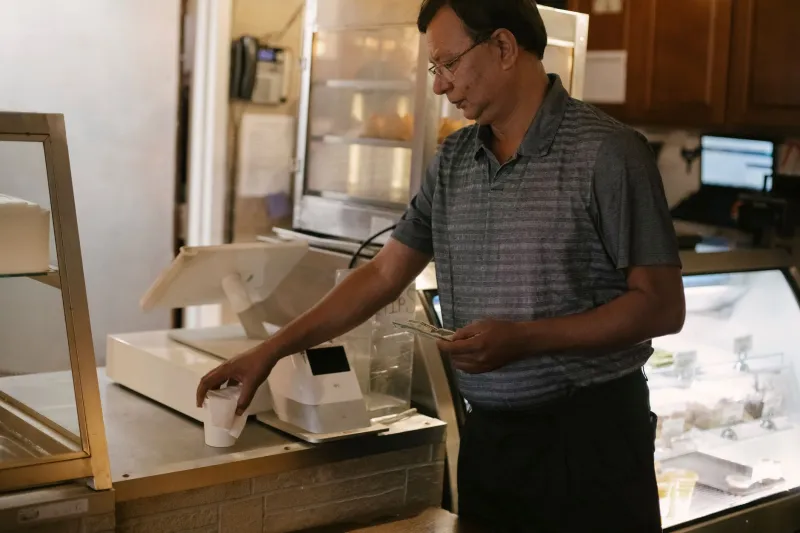
I was standing near the back of a FamilyMart in Osaka, pretending to deliberate between two flavors of onigiri, when I caught the cashier in my peripheral vision. A customer had just walked out the sliding doors. The transaction was done, the receipt printed, the yen exchanged. And then the cashier — facing a completely empty counter — gave a small, clean bow to the space where that customer had been standing.
No one was watching. The customer was already on the sidewalk. The bow was, by any practical definition, useless.
And yet it happened. Quietly, automatically, like breathing.
The Performance No One Asked For
If you've spent any time in Japan, or even just watched enough slice-of-life anime set in convenience stores, you've probably clocked this kind of thing before. Employees bowing to the backs of exiting customers. Staff in stockrooms bowing toward the shop floor before stepping onto it. Customer service workers at call centers who bow while on the phone, even though the person on the other end absolutely cannot see them.
To a lot of Western observers — especially Americans raised in a service culture built around efficiency and throughput — this reads as either adorable or baffling. Why maintain a ritual when the function of that ritual has already been served? Why bow to an empty aisle?
The short answer is: because the bow was never really for the customer.
The longer answer is where it gets interesting.
Respect as Internal Architecture
In Japan, the concept of keigo — formal, respectful language — and its physical equivalent in bowing (ojigi) aren't just tools for managing social transactions. They're closer to a kind of internal architecture. A way of structuring your own mind and intentions, regardless of who's watching.
When a conbini worker bows after a customer has left, they're not performing for the customer. They're reinforcing something in themselves. The gesture closes a loop — this interaction mattered, this person mattered, and I mark that — in a way that doesn't require external validation to be real.
This is philosophically pretty different from how American service culture tends to work. In the US, customer service is largely framed as a response to the customer's presence. You smile because someone is there to receive the smile. You say "have a nice day" because there's a person in front of you to say it to. The moment that person is gone, the transaction is genuinely over, and there's no cultural expectation that anything lingers.
That's not a criticism. It's just a different model — one built around acknowledgment as a two-way exchange rather than a one-way commitment.
What Anime Gets Right (That We Sometimes Miss)
Here's where it gets personal for a lot of anime fans.
If you've watched Working!!, Shirobako, or honestly any slice-of-life series where characters hold part-time jobs, you've probably noticed how much screen time gets devoted to the rituals of work. The way characters greet the start of a shift. The careful formality of handing something to a customer with both hands. The specific phrases used at specific moments — irasshaimase, arigatou gozaimashita, mata okoshi kudasai.
Western viewers sometimes read this as a quirk of anime's pacing — filler, almost. But it's actually one of the more accurate things those shows portray about daily Japanese life. The rituals aren't decoration. They're the point.
There's a reason so many international anime fans describe feeling a kind of wistfulness when they watch those scenes — a sense that something is being taken seriously that often isn't taken seriously back home. The dignity of small work. The idea that showing up and doing a thing well is itself worthy of a kind of ceremony.
The Efficiency Trap
America is really, really good at service that's fast. We've optimized the transaction within an inch of its life. Mobile ordering, self-checkout, one-click purchasing — we've systematically removed every possible moment of friction between wanting a thing and having it.
What we've also done, maybe without meaning to, is systematically remove the human ritual from the exchange.
This isn't nostalgia talking. It's just worth noticing that when you strip everything down to pure efficiency, what you're left with is a system that works great but doesn't particularly feel like anything. Nobody bows to the Instacart app. No one marks the moment a package ships with a gesture of gratitude.
Japan hasn't gotten efficiency wrong, by the way. Japanese convenience stores are among the most operationally precise retail environments on earth. The bowing doesn't slow anything down. It exists in the margins of the transaction, in the seconds before and after, where efficiency has no jurisdiction.
Dignity Doesn't Need an Audience
There's something almost radical about the idea that a gesture of respect is equally valid whether or not anyone receives it.
In a culture that runs heavily on metrics — reviews, ratings, feedback forms, social proof — the notion that you can do the thing right even when no one's measuring feels almost countercultural. The conbini worker bowing to an empty doorway isn't performing for Yelp. They're not angling for a tip or a five-star review. They're just closing the loop on a human interaction with the same care they'd use if a hundred people were watching.
That's not inefficiency. That's integrity.
And honestly? The more I think about it, the more I wonder if that's the thing we're actually missing — not the bow itself, but the underlying belief that made the bow happen in the first place. The idea that how you treat people (and the space where people were) reflects something real about who you are, independent of whether anyone's keeping score.
A Small Thing That Isn't Small
Next time you're watching a conbini scene in an anime and the staff member bows to no one in particular, try not to fast-forward past it.
It's easy to read as background detail. But it might actually be the whole thesis — a quiet argument that respect isn't a transaction, gratitude isn't a performance, and dignity doesn't need a witness to be genuine.
That's a pretty good philosophy for a Tuesday afternoon in a convenience store.
Or anywhere else, honestly.