The Two Seconds Before the First Bite That Japan Has Always Known Matter Most
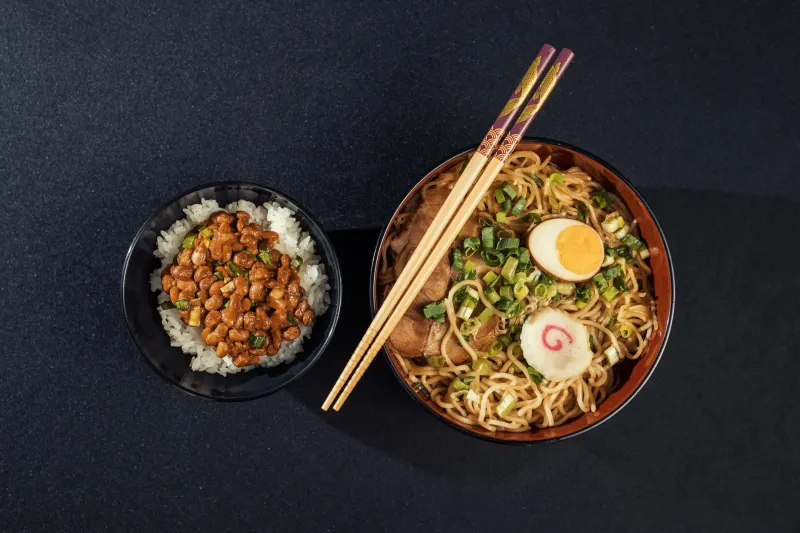
Somewhere between pulling out your phone and shoveling the first forkful of whatever's in front of you, there's a moment you've been skipping your entire life. Most Americans have. It's not your fault — nobody taught you it existed.
In Japan, that moment has a name: itadakimasu.
It sounds like a small thing. A word, a bow of the head, maybe two seconds of stillness before the meal begins. But the more time you spend with it — or honestly, just thinking about what it means — the more it starts to feel less like a cultural quirk and more like a missing piece of the way a lot of us eat, live, and move through our days.
What the Word Actually Means (It's Not 'Bon Appétit')
The easy explanation is that itadakimasu means something like "let's eat" or "thank you for the food." Tour guides say it. Language apps say it. That's not wrong, but it's the shallowest reading you can give it.
The word comes from the verb itadaku — a humble form of "to receive." When you say itadakimasu, you're acknowledging that you are humbly receiving something. Not just the food on the plate, but everything that made the food possible. The farmer who grew the rice. The fish that gave its life. The cook who spent time making something nourishing. The hands that packed it at the grocery store. The rain that fell on the field six months ago.
You're not required to think about all of that every time. But the word holds space for it. That's the point.
There's also a Buddhist thread running through itadakimasu — the acknowledgment that eating means something living gave itself up so you could continue. Even vegetables. Even rice. There's a quiet humility in that recognition, and it changes the texture of the moment before you eat, even slightly.
The American Version of This Moment (Or the Lack of It)
Let's be honest about what actually happens at mealtimes in the US. You order, it arrives, you eat. Or you microwave something, scroll through your phone while it heats, carry it to the couch, and eat in front of a show you're not fully watching. Or you grab drive-through between two errands and consume it at a red light.
None of this is a moral failure. It's just the pace of things. But the absence of any ritual pause — any acknowledgment that food is actually happening and that it came from somewhere — means most Americans eat in a state of partial presence at best.
Grace before meals exists in a lot of American households, mostly tied to religious tradition. And that's real and meaningful for the people who practice it. But for the growing number of people who don't have a religious framework for mealtimes, there's kind of... nothing. No ritual, no pause, no moment of transition between "doing other things" and "eating this meal."
The result is that food becomes background noise. Something that happens while you're doing something else. And there's a real psychological cost to that, even if it's hard to name.
Why the Pause Actually Changes Something
Here's where it gets interesting, because the value of itadakimasu isn't mystical. It's actually pretty well-supported by the way attention and appreciation work.
When you pause before eating — even briefly — you're doing a few things at once. You're signaling to yourself that this moment is distinct. You're transitioning from whatever state you were in before (stressed, distracted, rushing) into the present one. And you're priming your brain to notice what's in front of you rather than processing it automatically.
Gratitude research — and yes, there's a lot of it — consistently shows that acknowledging something before you receive it changes how you experience it. Not in a fake, forced-positivity way. Just in the basic sense that attention shapes experience. If you say itadakimasu and mean it even a little, you're more likely to actually taste your food. To notice you're full. To feel like you ate, rather than just having technically consumed calories.
Japanese food culture is deeply intertwined with this kind of mindfulness, not as a wellness trend, but as something that's just baked into how meals work. The ritual exists so you don't have to consciously decide to be present — the structure does it for you.
You Can Borrow This Without Appropriating It
Some people get nervous here. Is it weird for an American to say a Japanese phrase before eating? Is that cosplay? Is that disrespectful?
Honestly, no. Itadakimasu isn't sacred in a religious-exclusivity sense. It's cultural, yes, but it's also just a practice — a way of relating to food that anyone can learn from. Plenty of people who've spent time in Japan or fallen deep into anime fandom (the kind where you notice how characters always say it before eating and start to feel the absence of it in your own life) have quietly adopted it or something like it.
You don't have to say the Japanese word if it doesn't feel right. What matters is the structure: a pause, an acknowledgment, a small act of presence before the first bite. Call it whatever fits your life. Or say nothing and just stop for two seconds.
The form is flexible. The function is the point.
How to Actually Start Doing This
If you want to try building this into your daily life — and I'd genuinely recommend it — the simplest version looks like this:
Before you eat, stop. Put your phone face down. Set down whatever you're holding. Take one breath.
Acknowledge the food. Not in a performance for anyone else. Just internally. This came from somewhere. Someone made this, or grew this, or caught this. You're about to eat it.
Then eat.
That's it. Two seconds, maybe three. No elaborate ritual required. If you want to say itadakimasu, say it. If you want to invent your own word or phrase or just nod slightly, do that. The point is the pause, and the intention behind it.
A lot of people who start doing this report something unexpected: they enjoy their food more. Not because the food changed, but because they showed up for it.
The Meal Is Already in Front of You
Japan figured something out that American culture has mostly bulldozed in the name of efficiency: the beginning of a meal is itself part of the meal. The moment before the first bite is not wasted time. It's the hinge that turns eating from a function into an experience.
Itadakimasu is a word, but it's also a practice of humility and attention. It says: I know this didn't appear out of nowhere. I know something was given so I could receive it. I'm here for this.
You don't need to move to Japan to have that. You just need to stop for two seconds before you start.
That permission? You've always had it. Japan just had the good sense to make it official.