The Cracked Cup Is the Best Cup: How Japan Taught Me to Stop Flinching at Worn Things
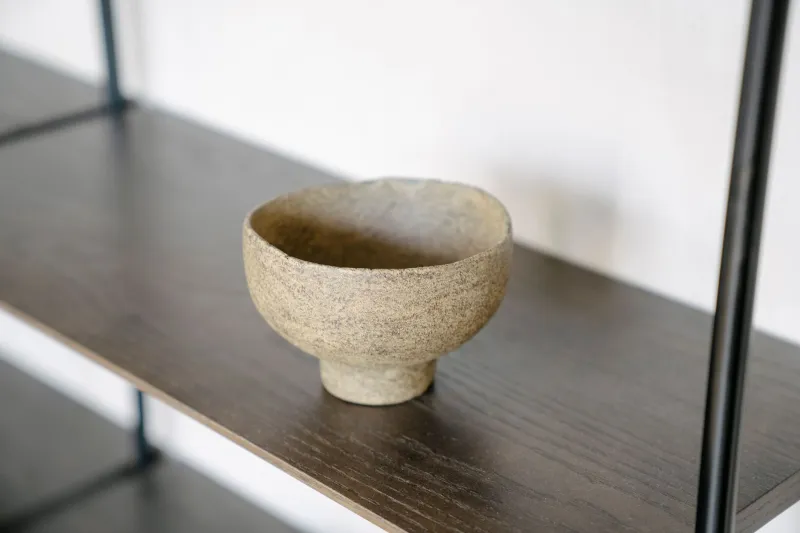
There's a mug in my kitchen cabinet that I keep meaning to throw away. The handle has a hairline crack running halfway up it, the glaze has gone a little dull on one side, and if I'm being honest, it looks like it survived something. I bought a replacement months ago. The replacement is still in the cabinet, untouched, still wearing its little paper price tag.
I use the cracked one every single morning.
I didn't have a name for why until I started paying closer attention to the way Japanese aesthetics actually work — not the glossy, perfectly curated version that ends up on Pinterest boards labeled "minimalist inspo," but the real, lived-in, slightly scuffed version that shows up in old kissaten coffee shops and centuries-old temple gardens.
The word that kept coming up was kitanai — which translates roughly as "dirty" or "messy" — but that translation misses the point almost entirely.
What 'Kitanai' Actually Means in Practice
In everyday Japanese conversation, kitanai is just a neutral descriptor. Messy room, muddy shoes, that kind of thing. But in the context of aesthetics and craft, it carries a different weight. It's used — sometimes affectionately, sometimes admiringly — to describe things that show their history. A wooden cutting board worn smooth in the center from years of use. A ceramic tea bowl where the glaze has shifted and pooled in ways the maker never fully controlled. A gardening apron so thoroughly stained it's basically a map of every season it's been through.
This sits right alongside more famous Japanese aesthetic concepts you've probably already heard of — wabi-sabi, which finds beauty in impermanence and incompleteness, and kintsugi, the practice of repairing broken pottery with gold so the cracks become the most visually interesting part of the object. But kitanai beauty feels a little rawer than those, a little less polished as a philosophy. It's not about artfully repaired fractures. It's about the fractures you just... leave alone because they don't actually need fixing.
A weathered noren (those split fabric curtains hanging in shop doorways) that's been bleached by summers of sun and stiffened by winters of cold isn't a sign a shop is neglected. It's a sign the shop has been there, consistently, doing its thing, long enough for the weather to say so.
The American Relationship With Wear and Tear
Here's where things get a little uncomfortable if you're American, because our default setting is basically the opposite of this.
We replace things. Constantly. The moment something shows visible wear, the cultural pressure to upgrade kicks in — new phone, new couch, new wardrobe, new car. "Worn" reads as "failed" in a lot of American contexts. We sand down surfaces, repaint over patina, and feel vaguely embarrassed when guests notice that our couch cushions have gone a little flat.
And there's an emotional cost to that, even if we don't name it. The constant low-grade anxiety of maintaining the appearance of newness is exhausting. It turns objects into performance props rather than tools you actually live with. It makes your home feel like a showroom you happen to sleep in.
Hustle culture amplifies this into people, too. The pressure to show up looking polished, performing peak productivity, never letting anyone see the cracks — literal or otherwise — is just the kitanai anxiety applied to human beings. Which is a lot.
What Changes When You Let Things Look Lived In
I have a friend who spent two weeks in Kyoto a couple years back and came home completely changed about her apartment. Not in a "I need to redecorate" way — more like she stopped apologizing for the scuff marks on her hardwood floors. She started noticing that those marks were from her dog sliding around corners, from years of dinner parties, from moving furniture around when she was bored on Sunday afternoons. The floor was a record of her life in that apartment, and she'd been treating it like a problem.
That shift — from "this thing is damaged" to "this thing has a story" — is small but it does something real to your daily baseline anxiety. Objects stop being things you're constantly failing to maintain and start being things you're actually in a relationship with.
Japanese craft culture gets at this deliberately. Pottery made in the mingei (folk craft) tradition — championed by Soetsu Yanagi in the early 20th century — specifically celebrates objects made for daily use, objects that are meant to be handled until they show it. The beauty isn't despite the use. It's because of it.
Anime fans might recognize this instinct in the way certain beloved series treat old, worn spaces with obvious affection — the cluttered, warm interiors of Spirited Away, the weathered wooden buildings in My Neighbor Totoro, the lived-in texture of basically any Ghibli background that makes you feel like you could step into it. There's a reason those spaces feel comforting rather than sad. The wear signals home.
How to Actually Apply This (Without It Becoming a Whole Thing)
You don't need to go full philosophy student about this. Here's what it looks like practically:
Stop replacing things that still work. If it functions and the wear is cosmetic, sit with it for a minute before ordering a replacement. Ask whether you actually dislike it or whether you've just been trained to see wear as failure.
Notice what the wear is from. The dent in your wooden kitchen table, the faded patch on your favorite jacket, the scratches on your laptop case — those are records. They're yours. They cost you nothing to keep.
Let imperfect things be the good things. The slightly lopsided handmade mug from a craft fair. The plant pot with a chip in it. The vintage lamp that's a little wobbly. These are often the objects people actually love most in a space, precisely because they have texture.
Apply it to people, including yourself. The kitanai aesthetic applied to humans just means: you don't have to be pristine to be worth something. The tired eyes, the laugh lines, the awkward phases — these are the record of a person who has actually been living.
The Cracked Cup Stays
I'm not throwing out the mug. I've decided that officially.
The crack is stable — it doesn't leak, doesn't affect the structural integrity in any real way, just looks like it's been through some mornings. Which it has. Dozens of them. Hundreds, probably. It holds coffee exactly as well as it ever did, maybe better, because at this point I know it.
Japan didn't invent the idea that worn things have value. But it built an entire aesthetic vocabulary around it, a cultural permission slip to stop treating imperfection as a problem to be solved and start treating it as information about a life actually being lived.
That's the kitanai beauty that doesn't really translate in a single word — the quiet, slightly scruffy dignity of things that have been genuinely used, genuinely loved, and are still here.
Your cracked cup is probably the best cup too.